The Story of Rolls-Royce: From Silver Ghost to Phantom
Rolls-Royce occupies a singular place in automotive history, a name synonymous with quiet refinement, engineering precision, and an unwavering commitment to craftsmanship. The journey from the early twentieth century to the present day reveals not only a series of remarkable vehicles but also a philosophy that has remained remarkably consistent. Understanding this evolution requires looking at the foundational models that defined the brand, the technical and cultural shifts that shaped its direction, and the way each generation of engineers and designers has interpreted the core principles of luxury motoring.
The story begins with the Silver Ghost, a car that established Rolls-Royce as a benchmark for reliability and smoothness. Over the decades, the marque adapted to changing times, introducing new chassis, engines, and coachwork while preserving the handmade approach that distinguished it from mass-produced competitors. The Phantom nameplate, which emerged in the 1920s, became the flagship line that continues to carry the brand’s most ambitious expressions of design and comfort. Tracing this trajectory offers insight into how a single company can maintain its identity across more than a century of technological and social change.
This article explores the key chapters of that story, focusing on the vehicles and the craftsmanship methods that have defined Rolls-Royce. Rather than making claims about superiority or guaranteed outcomes, the aim is to present the context in which these cars were conceived and built, and to examine the processes that have allowed the brand to endure.
The Silver Ghost and the Birth of a Reputation
The model that put Rolls-Royce on the map was the 40/50 hp, later known as the Silver Ghost. Introduced in 1906, it was designed to address the reliability issues common among early automobiles. Charles Rolls and Henry Royce pursued a philosophy of mechanical refinement, and the Silver Ghost quickly gained a reputation for its silent running and durability. One of the most famous demonstrations was a 15,000-mile reliability trial in 1907, which the car completed without a single involuntary stop. Such feats were not presented as guarantees for every owner, but they did illustrate the engineering approach that Rolls-Royce had adopted.
The chassis of the Silver Ghost was robust and carefully machined, with a six-cylinder engine that set new standards for smoothness. Customers would purchase the rolling chassis separately and then commission a coachbuilder to create the body. This separation between chassis and bodywork allowed for a high degree of personalization, a tradition that would continue for decades. The craftsmanship involved in both the mechanical components and the coachwork was labor-intensive, with many parts hand-fitted and finished. Rolls-Royce did not focus on speed or outright power; instead, the emphasis was on reducing vibration, noise, and mechanical fragility. This approach resonated with wealthy buyers who valued refinement over raw performance.
By the early 1920s, the Silver Ghost had evolved through several updates, but the market was beginning to change. Competitors were introducing more powerful engines and more modern design languages. Rolls-Royce responded by developing a new model that would become the first Phantom.
The Phantom Emerges: Models I, II, and III
In 1925, Rolls-Royce launched the New Phantom, later retroactively named Phantom I. It featured a larger, overhead-valve engine and a new chassis that offered improved handling. The Phantom I continued the practice of separate coachwork, and many of the most striking examples were bodied by prestigious firms such as Barker, Park Ward, and Hooper. The engineering team, led by Henry Royce until his death in 1933, focused on incremental refinements: better oiling systems, more robust bearings, and quieter valve trains. The Phantom I was not a revolutionary departure but a careful evolution of the principles established by the Silver Ghost.
The Phantom II, introduced in 1929, brought significant changes to the chassis layout, with a lower centre of gravity and a redesigned suspension that improved stability at higher speeds. The engine received updates to increase torque and reduce fuel consumption. During this period, Rolls-Royce also began to offer factory-built bodies on some models, though coachbuilt options remained the norm. The Phantom II was produced until 1936, and it represented the final design overseen by Henry Royce himself. The craftsmanship of these cars involved meticulous attention to materials: leather hides were selected for consistency, wood veneers were matched for grain, and mechanical components were run-in and tested before installation.
The Phantom III, launched in 1936, was the last pre-war flagship and the first Rolls-Royce to use a V12 engine. This engine was designed for smoothness and power delivery rather than outright speed, and it featured advanced elements such as hydraulic tappets and a complex cooling system. The Phantom III was also the first model to incorporate independent front suspension, which improved ride quality. Production was interrupted by World War II, and only 727 examples were built. The Phantom III marked the end of an era, as post-war economic conditions and changing manufacturing methods would force the company to adapt its approach.
Post-War Transition and the Modern Era
After the war, Rolls-Royce moved to a more integrated manufacturing model, though handcraftsmanship remained central. The Silver Dawn, introduced in 1949, was the first Rolls-Royce to be offered with a standard steel body, reducing the reliance on external coachbuilders. It shared its platform with the Bentley Mark VI, but received its own engine and interior appointments. The Silver Cloud, launched in 1955, replaced the Silver Dawn and became one of the most recognizable post-war models. Its design was more streamlined, and it featured a six-cylinder engine that was later upgraded to a V8 in 1959. The Silver Cloud II and III continued the evolution, with improvements to power steering, brakes, and air conditioning.
During the 1960s and 1970s, Rolls-Royce faced financial difficulties and ownership changes, yet the core philosophy of bespoke luxury persisted. The Silver Shadow, introduced in 1965, was a departure from tradition: it used a monocoque body instead of a separate chassis, and it was the first Rolls-Royce to feature disc brakes and self-levelling suspension. Some purists criticized the loss of the old chassis-based system, but the Silver Shadow offered a quieter, more comfortable ride that appealed to a new generation of buyers. The craftsmanship adapted to new materials and processes, but the commitment to hand-finishing components like the grille, upholstery, and wood trim remained intact.
By the 1990s, the brand had been acquired by BMW, which brought financial stability and engineering resources. This set the stage for a complete reimagining of the flagship model, one that would return to the Phantom nameplate after a hiatus of several decades.
The Modern Phantom: A Return to the Flagship
In 2003, Rolls-Royce launched the seventh-generation Phantom, the first model developed entirely under BMW’s ownership. It was a deliberate return to the grand, imposing proportions of the pre-war Phantoms, with a long wheelbase, a prominent grille, and a powerful V12 engine. The engineering team prioritized isolation from road noise and vibration, using double-glazed windows, extensive sound deadening, and a unique aluminium spaceframe that provided rigidity without excessive weight. The interior was designed around the principle of creating a calm, serene environment, with materials selected for their tactile and visual qualities.
The Phantom’s production process reflected decades of accumulated craft knowledge. Each car involved hundreds of hours of handwork: the leather was stitched using traditional techniques, the wood veneers were book-matched and finished with multiple layers of lacquer, and the paint was applied and polished by hand. The company offered an extensive bespoke program that allowed customers to tailor virtually every aspect of the car. This approach was not about claiming that every detail was superior, but rather about providing a process that could accommodate individual preferences within a framework of established methods.
The Phantom was updated in 2012 and then replaced by an eighth-generation model in 2017. The new Phantom built on the same foundations, incorporating newer materials and technologies such as laser headlights and a more sophisticated air suspension system, while retaining the handcrafted interior and the signature coach doors. The evolution from the Silver Ghost to the modern Phantom shows how a company can preserve its core values while adapting to changing engineering possibilities and customer expectations.
Craftsmanship and Legacy: The Enduring Philosophy
Throughout its history, Rolls-Royce has maintained a consistent approach to manufacturing, one that prioritizes methodical assembly, individual attention to detail, and a willingness to accommodate client requests. The company has never claimed that its cars are perfect or that they guarantee a particular outcome; rather, the documentation and marketing have emphasized the processes used to achieve a certain level of refinement. For example, every engine is run-in on a test bed before installation, and each car undergoes a series of road tests to identify and correct any anomalies. These procedures are part of a quality control system that relies on human judgment as much as automated measurement.
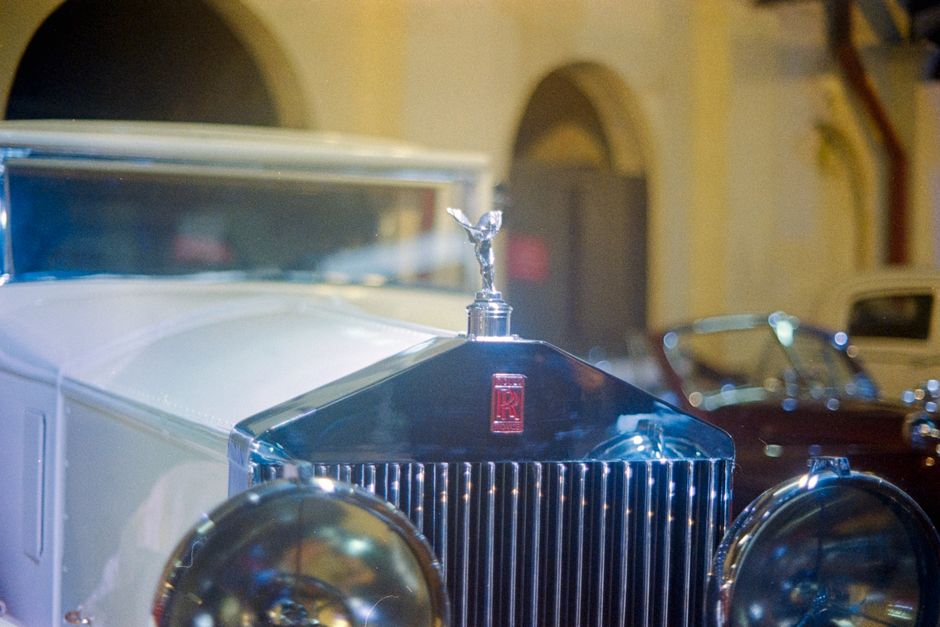
The legacy of the Silver Ghost and the Phantom can be seen in the way Rolls-Royce continues to approach new projects. The brand’s design language evolves slowly, and new models often reference historical details such as the grille shape, the “double R” monogram, and the use of contrasting paint colors. At the same time, the company invests in research into lightweight materials, electric powertrains, and digital customization tools, all while ensuring that the handcrafting traditions are not lost. This balance between continuity and change is a deliberate strategy, not a guarantee of future success, but it offers a framework for understanding how a luxury manufacturer navigates the pressures of the modern automotive industry.
In tracing the journey from the Silver Ghost to the Phantom, one observes a narrative of incremental refinement and careful adaptation. The cars themselves are tangible evidence of a philosophy that values process over promise, and that accepts the limits of engineering while striving for the highest possible execution. For those interested in automotive history, the story of Rolls-Royce provides a case study in how craftsmanship and technological innovation can coexist across generations.